

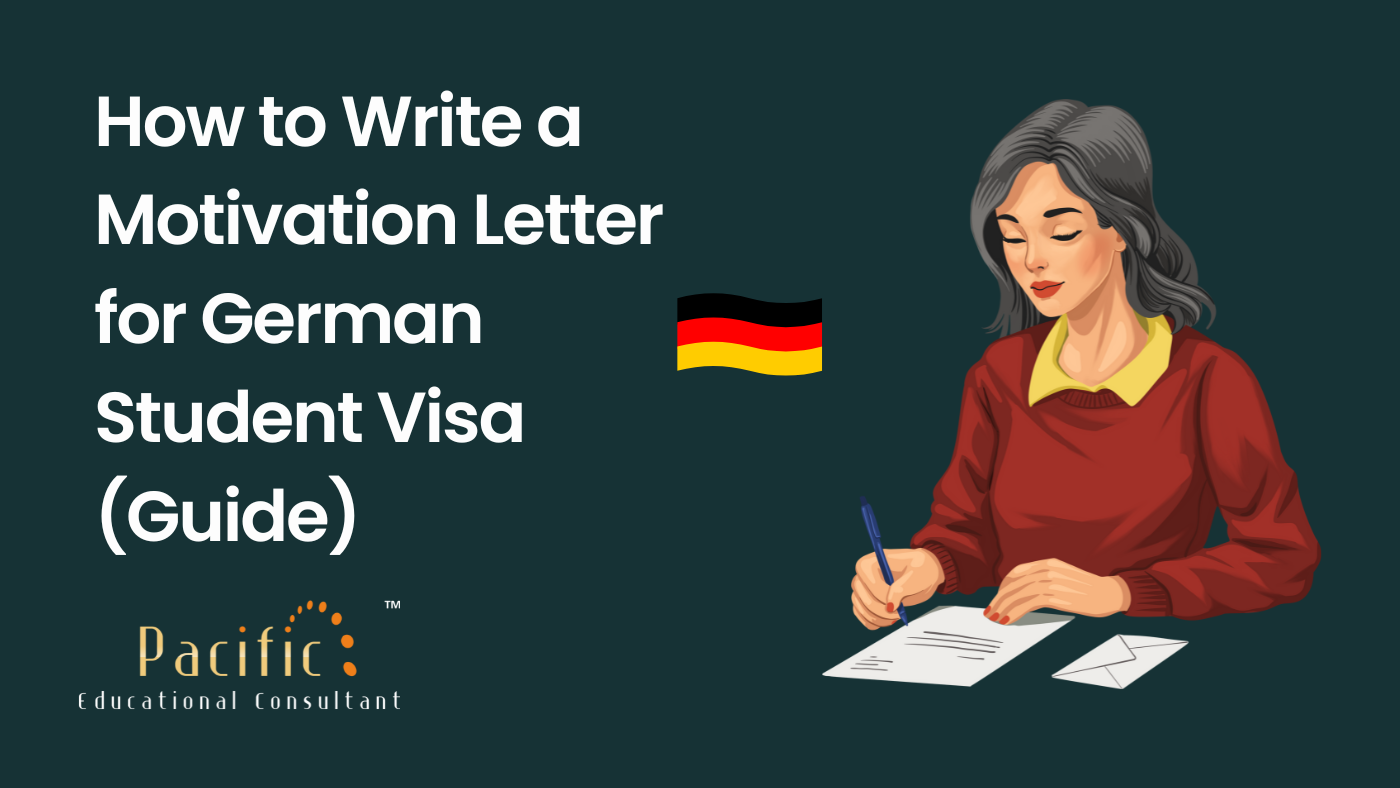
If you’re planning to study in Germany, one document you absolutely cannot afford to overlook is your motivation letter—also known as a Motivationsschreiben. Whether you’re applying for admission to a German university or submitting documents for your German student visa, this letter plays a critical role in your application.
Unlike transcripts or certificates, a motivation letter tells your personal story. It explains why you chose a specific course, why Germany fits into your academic journey, and how your education connects to your future goals. For bachelor’s, master’s, or PhD applicants, a strong motivation letter can significantly improve both admission success and visa approval chances.
In this guide, you’ll learn what a motivation letter is, why it matters, how university and visa letters differ, and—most importantly—how to write one that feels honest, structured, and convincing.
A motivation letter is a formal yet personal document that explains your academic interests, career goals, and reasons for choosing a specific program and country. German universities use it to assess whether you are a good academic and cultural fit for the programme.
For visa authorities, the motivation letter helps them understand:
Your purpose of travel
Your study intentions
Your plans after graduation
Your financial preparedness
In simple words, it answers one key question:
“Why should Germany invest in you as a student?”
A motivation letter is often the only place where decision-makers hear your voice.
It helps you:
Stand out beyond grades and test scores
Demonstrate clarity about your academic path
Show genuine interest in Germany’s education system
Prove that your study plan is logical and well-researched
For visa officers, a clear and well-written motivation letter also reduces doubts about visa misuse or overstaying, which is why this document carries serious weight in the visa decision process.
Although both documents are called “motivation letters,” their purpose and focus are different.
Focuses on academic background and subject interest
Explains why you chose the specific university and programme
Highlights relevant skills, projects, and experiences
Shows how the course supports your long-term career goals
Focuses on purpose of studying in Germany
Explains career plans after graduation (often return to home country)
Clearly mentions financial arrangements
Assures compliance with visa rules
Important: Never submit the same motivation letter for both purposes. Each must be tailored to its audience.
Before you write a single sentence, pause and prepare.
Be honest—avoid exaggeration or fake achievements
Understand your course structure and outcomes
Be clear about your future goals
Use simple, clear language (especially if English or German is not your first language)
Avoid copying templates—visa officers can easily identify generic content
A good motivation letter feels personal, not artificial.
Follow these four practical steps to create a strong and authentic motivation letter.
Start with research—not writing.
Read the official programme description
Understand course modules, internships, or research focus
Note what makes the programme unique
Then, list your own:
Academic background
Projects or internships
Relevant skills or interests
Personal experiences connected to the field
Tip: Always use information from the university’s official website to show genuine interest.
Most German motivation letters are 500–700 words long (1–2 pages).
Introduction
Introduce yourself briefly. Mention the programme and university you are applying to. Explain what sparked your interest in this field.
Body Paragraphs
Describe your academic background and experiences. Explain how your previous studies or activities prepared you for this course. Clearly link your interests with the programme content and explain why studying in Germany is important for your growth.
Conclusion
Reaffirm your motivation in one or two sentences. Express enthusiasm and readiness for the academic journey ahead. Thank the committee for their time and consideration.
Avoid repeating your CV. Instead, explain why your experiences matter.
Generic letters reduce credibility.
For universities: mention specific professors, research areas, teaching methods, or facilities
For visas: clearly explain your post-study plan and financial support
Visa officers want reassurance that:
Your education has a clear purpose
You have sufficient funds
You understand your responsibilities as a student
Customization shows seriousness and preparation.
Never submit your first draft.
Check grammar, spelling, and clarity
Read it aloud—it should sound natural
Ask a teacher, mentor, or study-abroad counselor to review it
Ensure the tone reflects you, not a copied template
A well-edited letter shows professionalism and commitment.
Your motivation letter is more than a requirement—it is your personal introduction to Germany’s education system. It allows universities and visa officers to understand your intentions, values, and potential.
Take time to research, reflect, and write honestly. When your motivation letter clearly connects your past, present, and future, it becomes one of the strongest tools in your study-abroad application.
Make it real. Make it personal. And most importantly—make it your own.
If you want expert guidance, personalized drafts, or visa-focused motivation letters for Germany, professional counseling can make the process smoother and more confident.
Your study journey starts with a strong story—tell it well.

Book a Free Counselling
Pacific Prime Membership — Study Abroad Support at Effectively ₹0
US Study Visa Interview Questions & Sample Answers
Study Visa Interview for USA: How to Prepare (F-1 2026)
APS Germany Full Guide to the APS Certificate for Indian Students

dMAT Online Course: 2026 Preparation Guide for Germany MS

dMAT Mock Test 2026 Free Sample Papers & Practice PDFs

Welcome to Pacific Educational Consultant and Classes, your trusted partner in unlocking a world of educational opportunities and personal growth.


© 2026 Pacific Educational Consultant. All rights reserved
 Canada
 United States
 United Kingdom
 Australia
 Germany
 France
 Netherlands
 New Zealand
 PTE
PTE
 IELTS General Training
 TOEFL iBT
 Duolingo English Test
 SAT
SAT
 GRE
GRE
 GMAT
GMAT
 SPOKEN ENGLISH
 SOP Writing
 Air Tickets
 Accommodation
 Career Counselling
 Visa Assistance