


The IELTS (International English Language Testing System) is one of the most popular English proficiency tests globally. Whether you’re applying for higher education, seeking employment abroad, or immigrating to a new country, preparing for the IELTS at home is entirely possible—and surprisingly effective—with the right strategies and resources. Here’s your complete guide to acing the IELTS from the comfort of your home.
The first step in your preparation journey is choosing the appropriate IELTS test. There are two main types: the Academic Test and the General Training Test.
The Academic Test is primarily for those applying to universities or professional institutions, while the General Training Test is for individuals moving to English-speaking countries for work, migration, or secondary education.
Understanding your purpose for taking the test will guide your study plan. If unsure, research the test type required by the institution or organization you’re applying to. Choosing the wrong test can lead to unnecessary stress and wasted time.
Understanding the IELTS test structure is crucial. The test is divided into four sections: Listening, Reading, Writing, and Speaking. Each section evaluates different skills:
Spend time learning each section's format, question types, and time limits. You can find detailed test information on the official IELTS website or other trusted sources.
The Listening section is challenging because it tests your ability to understand accents, vocabulary, and context in real-time. Here’s how to prepare:
To sharpen your skills further, focus on identifying main ideas, transitions, and implied meanings during listening exercises.
The Reading section assesses your ability to understand and analyze written content. Here’s how you can ace it:
Free resources like Project Gutenberg or Newsela can help you access diverse reading materials suited for IELTS preparation.
The Writing section requires both creativity and precision. It includes two tasks:
To excel:
Focus on expressing ideas clearly while maintaining a formal tone.
The Speaking test evaluates your fluency, pronunciation, grammar, and vocabulary. To prepare:
The Speaking test is interactive, so maintain a natural tone and avoid memorized responses.
The IELTS Band Score ranges from 0 to 9, with each band representing a level of proficiency. For example:
Understand the requirements for your desired score. This clarity will help you focus your preparation and allocate more time to weaker sections.
Before diving into intensive study, assess your current English level. This can be done through online tests, mock exams, or professional evaluations. Knowing your baseline will help you identify areas that need improvement, ensuring an efficient study plan.
Self-discipline is critical when preparing for IELTS at home. Here’s how to stay on track:
Goal setting keeps you motivated and focused, preventing burnout.
High-quality resources are key to effective preparation. Some recommendations include:
Choose a mix of free and paid resources to suit your budget.
Being strategic can make a huge difference on test day:
Mock tests simulate the real exam environment, building familiarity and confidence. After taking mock tests, seek detailed feedback to identify errors and areas for improvement. Peer study groups or online tutors can offer valuable insights.
Consistency is the secret to success. Revisit weaker sections, refine your strategies, and stay persistent. Celebrate small wins along the way to stay motivated.
Finally, make sure you’re fully prepared for the actual exam:
A calm, organized mind performs far better under pressure.
The best way to prepare is by combining self-study with high-quality resources, regular practice, and mock tests.
Preparation time depends on your current proficiency. On average, 1–3 months of consistent study is recommended.
Yes, self-preparation is entirely possible with the right materials and discipline.
Focus on improving weaker areas, practicing regularly, and using mock tests to refine strategies.
Yes, online resources like practice tests, apps, and tutorials are highly effective for self-study.
The difficulty level depends on your proficiency. With consistent preparation, it becomes manageable.
Preparing for the IELTS at home is entirely achievable with dedication and a structured approach. By understanding the IELTS test format, setting clear goals, using better resources, practicing regularly, and seeking feedback, you can improve your English proficiency and boost your confidence ahead of the exam day.
The duration depends on your current proficiency. On average, 1-3 months of consistent study is recommended.
Mock tests help you understand the test format, manage time, and identify weak areas for improvement.
We provide expert online coaching, personalized feedback, and access to high-quality resources tailored to your needs.
Simply call +91 8302793737 or visit our official website to get started today.
Preparing for the IELTS at home is not only achievable but also cost-effective and flexible. By following this step-by-step guide, you’ll be well on your way to achieving your desired band score. Remember, success comes with consistent effort and a well-structured plan. Good luck on your IELTS journey!
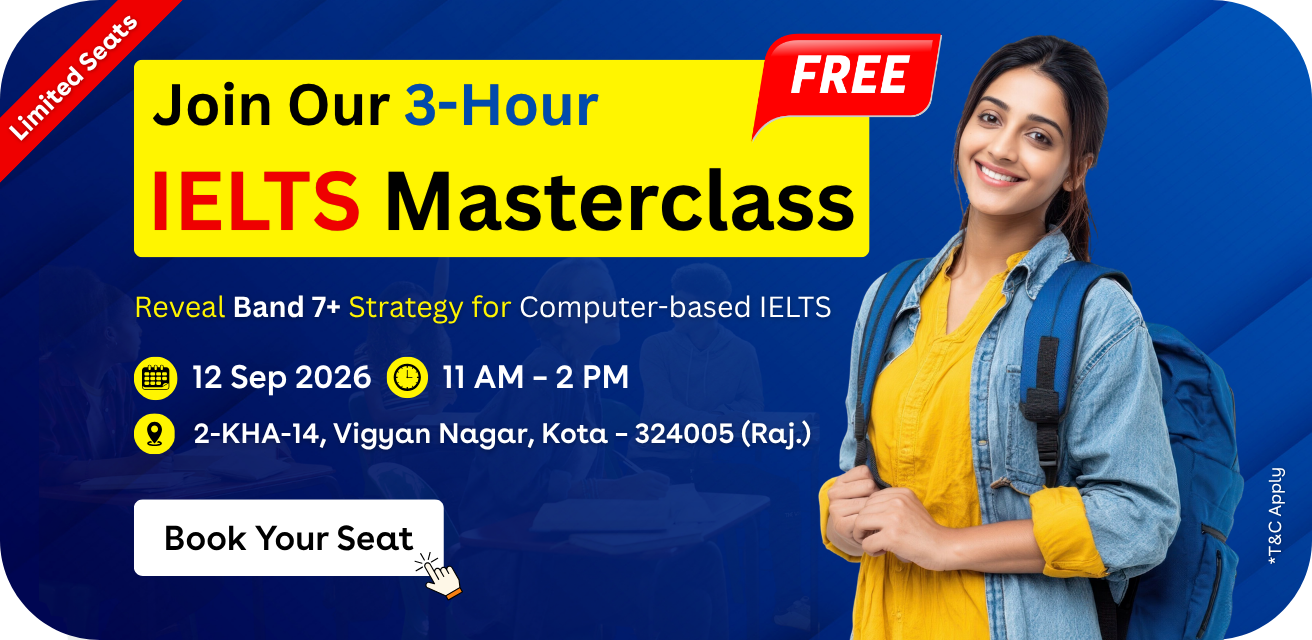
Book a Free Counselling
Pacific Prime Membership — Study Abroad Support at Effectively ₹0
US Study Visa Interview Questions & Sample Answers
Study Visa Interview for USA: How to Prepare (F-1 2026)
APS Germany Full Guide to the APS Certificate for Indian Students

dMAT Online Course: 2026 Preparation Guide for Germany MS

dMAT Mock Test 2026 Free Sample Papers & Practice PDFs

Welcome to Pacific Educational Consultant and Classes, your trusted partner in unlocking a world of educational opportunities and personal growth.


© 2026 Pacific Educational Consultant. All rights reserved
 Canada
 United States
 United Kingdom
 Australia
 Germany
 France
 Netherlands
 New Zealand
 PTE
PTE
 IELTS General Training
 TOEFL iBT
 Duolingo English Test
 SAT
SAT
 GRE
GRE
 GMAT
GMAT
 SPOKEN ENGLISH
 SOP Writing
 Air Tickets
 Accommodation
 Career Counselling
 Visa Assistance