

You should say:
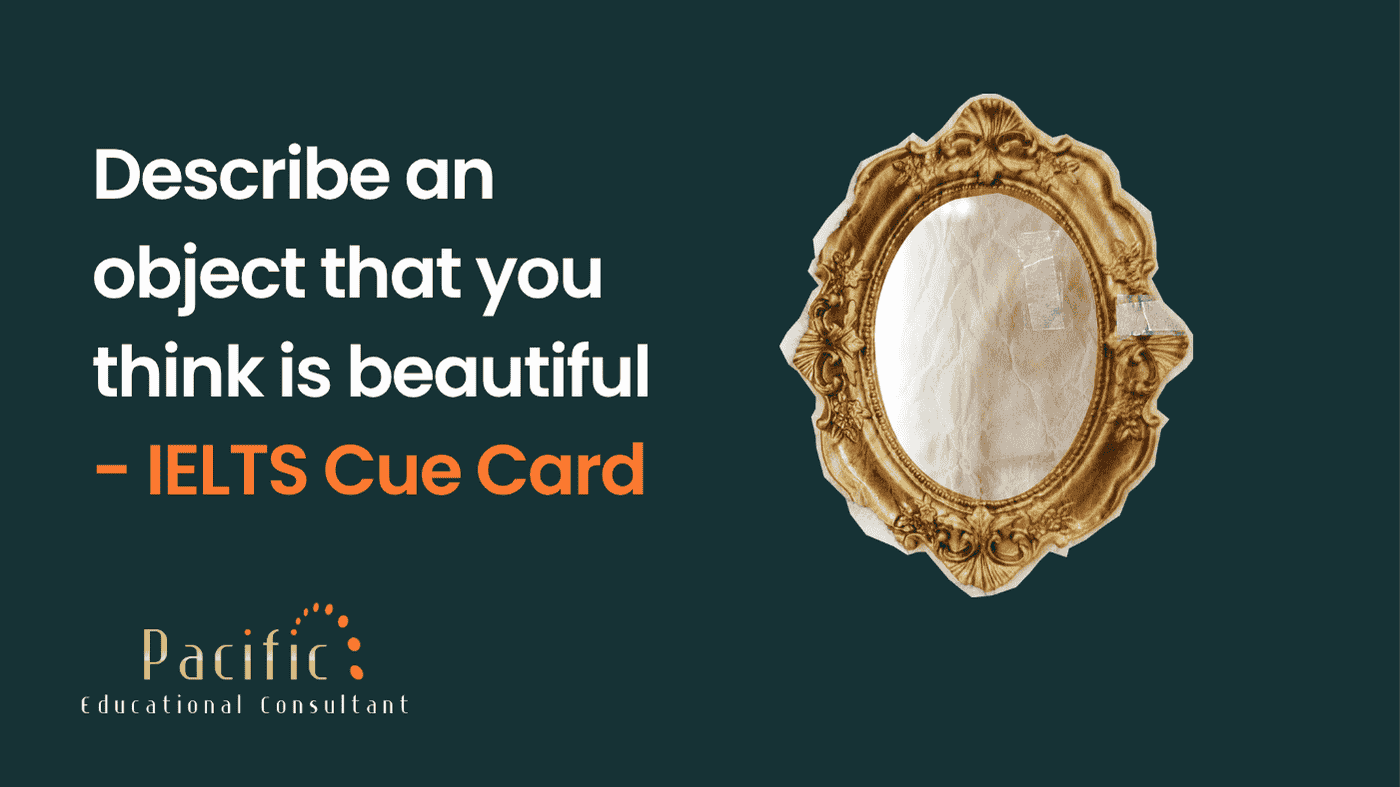
One of the most beautiful objects I’ve ever seen is a traditional hand-painted mirror frame made of wood.
I first saw it in a small handicraft shop in Jaipur, Rajasthan, when I was traveling there last year with my family.
The mirror frame was made of finely carved wood, decorated with tiny glass pieces and colorful Rajasthani motifs. It had intricate floral designs in shades of red, blue, and gold, with a few embedded stones that sparkled under the light. The craftsmanship was so detailed that every inch of the frame seemed to tell a story about the rich Indian culture and art.
I found it beautiful not only because of its visual appearance but also because of the skill and patience it must have taken to create it. It represented the tradition and creativity of Indian artisans. Whenever I look at such handcrafted pieces, I feel a sense of admiration for how art can transform an ordinary object into something extraordinary. The mirror was not just a household item—it was a perfect blend of culture, color, and creativity, which made it truly beautiful in my eyes.
Yes, I think there are more beautiful things now because technology and creativity have evolved. Modern design combines traditional craftsmanship with innovation. However, beauty in the past had more emotional and cultural depth, while today’s beauty often focuses on aesthetics and trends.
India is full of beautiful scenery. From the snow-covered Himalayas in the north to the backwaters of Kerala in the south, every region has something unique. I personally find the deserts of Rajasthan and the hill stations of Himachal Pradesh extremely picturesque.
People create beautiful things to express emotions, creativity, and ideas. Beauty gives joy and inspires others. It’s also a way for artists or designers to communicate culture, heritage, and personal identity through their work.
People come across beautiful things in nature, architecture, art galleries, or even daily life—like fashion, music, and digital designs. Social media platforms have also made it easier for people to discover and appreciate beauty globally.
Yes, in general, people in India prefer listening to music because it’s more accessible and emotionally engaging. Music plays a huge part in Indian culture—from films to festivals—whereas paintings and literature are appreciated by a smaller, more artistic audience.
People visit scenic places in person because no picture or book can capture the real atmosphere—the sound, smell, and feeling of being there. Experiencing beauty firsthand creates emotional memories and a stronger connection to nature and culture.


Book a Free Counselling

Study Visa in Switzerland for Indian Students 2026 Guide

Pacific Prime Membership — Study Abroad Support at Effectively ₹0

US Study Visa Interview Questions & Sample Answers

Study Visa Interview for USA: How to Prepare (F-1 2026)

APS Germany Full Guide to the APS Certificate for Indian Students

dMAT Online Course: 2026 Preparation Guide for Germany MS

Welcome to Pacific Educational Consultant and Classes, your trusted partner in unlocking a world of educational opportunities and personal growth.


© 2026 Pacific Educational Consultant. All rights reserved
 Canada
 United States
 United Kingdom
 Australia
 Germany
 France
 Netherlands
 New Zealand
 PTE
PTE
 IELTS General Training
 TOEFL iBT
 Duolingo English Test
 SAT
SAT
 GRE
GRE
 GMAT
GMAT
 SPOKEN ENGLISH
 SOP Writing
 Air Tickets
 Accommodation
 Career Counselling
 Visa Assistance