

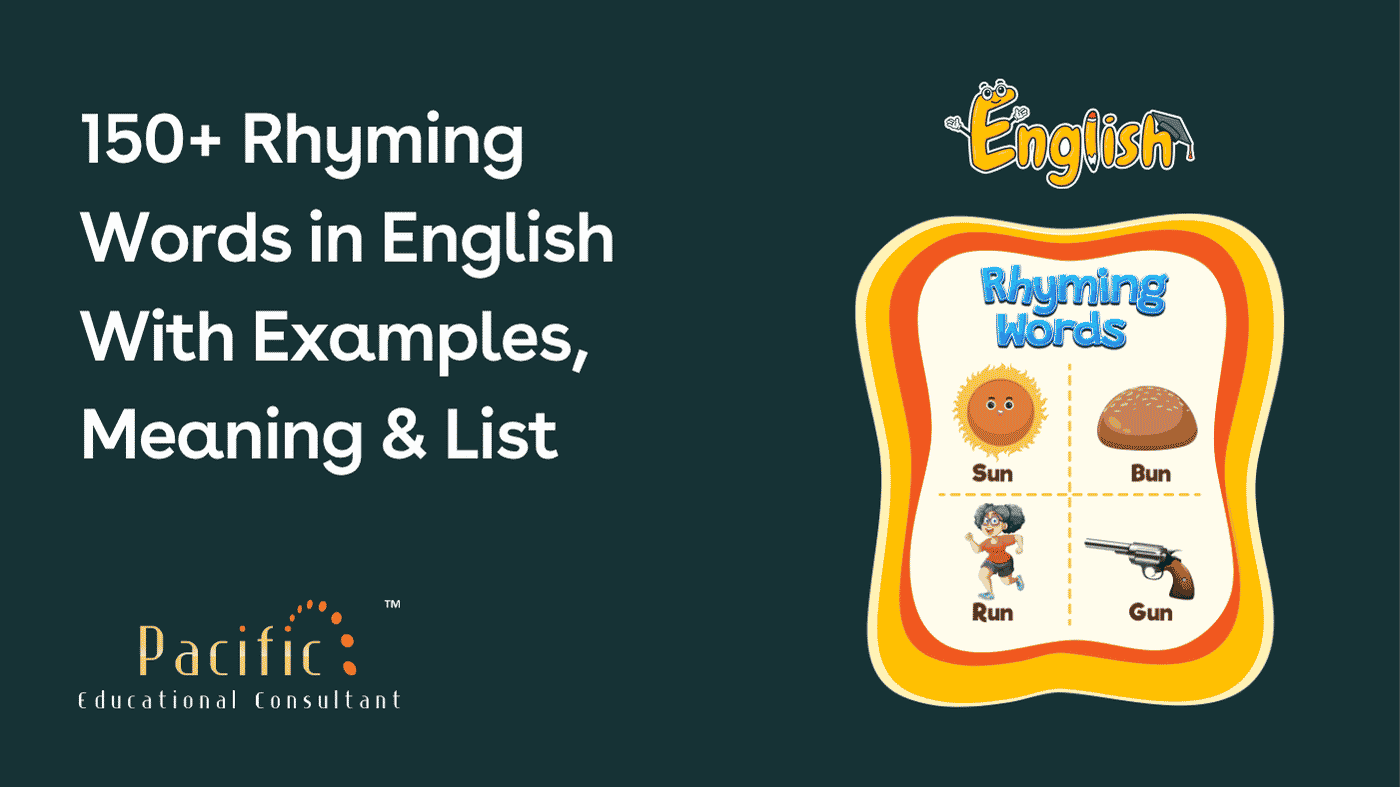
Rhyming words make English sound musical, catchy, and easy to remember. You often hear them in children’s poems, songs, stories, advertisements, speeches, and even daily conversations. When two or more words have the same or similar ending sound, they create a rhyme. For example, cat, hat, mat, and bat sound similar at the end, so they are called rhyming words.
Learning rhyming words in English is helpful for students, beginners, writers, poets, and language learners. It improves pronunciation, vocabulary, listening skills, speaking fluency, and creative writing. In this blog, you will learn the meaning of rhyming words, their examples, importance, benefits, types, and a list of 150+ rhyming words in English.
Rhyming words are words that have the same or similar ending sound. These words are commonly used in poems, songs, nursery rhymes, stories, and speeches to create rhythm and flow.
For example:
“I have a cat,
Her name is Pat,
She wears a hat,
And sleeps on a mat.”
In the above lines, the words cat, Pat, hat, and mat have the same ending sound. These are rhyming words. They make the poem sound attractive, smooth, and memorable.
In simple words, rhyming words are words that sound alike at the end. They help make English more interesting and fun to learn.
Rhyming words are important because they help learners understand sounds, rhythm, pronunciation, and word patterns. They are especially useful for children and beginners, but they are also helpful for adults who want to improve their English communication skills.
When students learn rhyming words, they understand how similar sounds are used in different words. For example, words like light, night, bright, and right help learners practice the “-ight” sound. This improves pronunciation and speaking clarity.
Rhyming words help learners discover new words. For example, if you know the word play, you can easily learn related rhyming words such as day, say, way, clay, and stay. This makes vocabulary learning easier and more enjoyable.
Rhymes train your ears to notice similar sounds. This improves listening skills, which is useful in daily conversations, IELTS listening, PTE listening, and spoken English practice.
Rhyming words make English learning playful and creative. This is why poems, songs, and nursery rhymes are commonly used to teach children English.
Words that rhyme are easier to remember because they have a rhythm. This helps students speak more fluently and remember phrases, poems, and vocabulary for a longer time.
Here are some common examples of rhyming words in English:
Cat – Bat, Hat, Mat, Rat, Pat, Sat, Fat
Ball – Call, Fall, Hall, Tall, Wall, Small, Stall
Rain – Brain, Chain, Train, Pain, Gain, Main, Plain
Book – Look, Cook, Hook, Took, Crook, Rook
Day – Say, Way, Play, Stay, Clay, Gray, Pay
Light – Night, Bright, Right, Sight, Fight, Flight
Tree – Free, See, Sea, Bee, Key, Agree, Three
Dog – Fog, Log, Jog, Frog, Blog, Hog, Clog
Time – Rhyme, Lime, Prime, Crime, Climb, Slime
Smile – File, Mile, Style, While, Aisle, Pile
These examples show how rhyming words create a similar ending sound and make sentences more rhythmic.
Below is a useful list of rhyming words for students and English learners.
Cat is one of the most common words used to teach rhyming words. Words that rhyme with cat include:
Bat
Hat
Mat
Rat
Pat
Sat
Fat
Flat
Chat
That
Brat
Scat
Example sentence:
The cat sat on the mat wearing a red hat.
Words that rhyme with ball include:
Call
Fall
Hall
Tall
Wall
Small
Stall
Mall
Crawl
All
Install
Overall
Example sentence:
The ball rolled near the wall in the big hall.
Words that rhyme with rain include:
Brain
Chain
Train
Pain
Gain
Main
Plain
Stain
Drain
Grain
Again
Airplane
Example sentence:
The train stopped in the rain near the main plain.
Words that rhyme with day include:
Say
Way
Play
Stay
Pay
Clay
Gray
Bay
Tray
Spray
Display
Holiday
Example sentence:
We will play outside today if the sky stays gray.
Words that rhyme with tree include:
Free
See
Sea
Bee
Key
Three
Agree
Degree
Flee
Fee
Knee
Spree
Example sentence:
I can see a bird sitting on the tree.
Words that rhyme with night include:
Light
Right
Bright
Sight
Fight
Flight
Might
Tight
Slight
Height
White
Delight
Example sentence:
The moon was bright in the sky at night.
Words that rhyme with dog include:
Fog
Log
Jog
Frog
Blog
Hog
Clog
Smog
Cog
Flog
Dialogue
Catalog
Example sentence:
The dog jumped over a log in the morning fog.
Words that rhyme with book include:
Look
Cook
Hook
Took
Crook
Rook
Nook
Shook
Notebook
Overlook
Example sentence:
I took a book and sat in a quiet nook.
Words that rhyme with smile include:
File
Mile
Style
While
Pile
Aisle
Tile
Trial
Profile
Compile
Example sentence:
She walked a mile with a big smile.
Words that rhyme with time include:
Rhyme
Lime
Prime
Crime
Climb
Slime
Chime
Dime
Sublime
Bedtime
Example sentence:
It is time to write a simple rhyme.
Words that rhyme with sky include:
Fly
High
Cry
Try
Why
My
Buy
Pie
Tie
Sigh
Dry
Apply
Example sentence:
The birds fly high in the blue sky.
Words that rhyme with bed include:
Red
Head
Fed
Led
Said
Dead
Bread
Thread
Spread
Dread
Shed
Ahead
Example sentence:
He kept the red book near his bed.
Words that rhyme with play include:
Day
Say
Way
Stay
Clay
Gray
Pay
Bay
Lay
Spray
Today
Away
Example sentence:
The children went out to play on a sunny day.
Words that rhyme with man include:
Can
Fan
Pan
Plan
Ran
Ban
Tan
Scan
Than
Van
Began
Japan
Example sentence:
The man made a good plan.
Words that rhyme with you include:
Blue
True
New
Do
Too
Two
To
Clue
Due
Shoe
Cue
Through
Example sentence:
I have a new book for you.
Words that rhyme with funny include:
Sunny
Honey
Money
Bunny
Runny
Dummy
Chummy
Lucky
Lovely
Silly
Note: Some of these words are near rhymes, which means they sound similar but do not rhyme perfectly.
Example sentence:
The bunny looked very funny on a sunny day.
Words that rhyme with jam include:
Ham
Dam
Ram
Sham
Slam
Clam
Glam
Exam
Program
Diagram
Example sentence:
He ate jam with bread after his exam.
Words that rhyme with life include:
Wife
Knife
Strife
Rife
Wildlife
Real-life
Work-life
Afterlife
Fife
Jackknife
Example sentence:
Good habits can improve your life and reduce daily strife.
Words that rhyme with school include:
Cool
Pool
Rule
Tool
Fool
Fuel
Stool
Jewel
Dual
Renewal
Example sentence:
We learned a new rule at school.
Words that rhyme with star include:
Car
Far
Bar
Jar
Guitar
Scar
Radar
Bizarre
Avatar
Example sentence:
The star looked bright from very far.
Words that rhyme with make include:
Take
Cake
Lake
Break
Shake
Snake
Wake
Bake
Fake
Mistake
Example sentence:
I will make a chocolate cake.
Words that rhyme with sound include:
Round
Found
Ground
Pound
Bound
Around
Profound
Surround
Background
Example sentence:
I found a shell on the ground.
There are different types of rhyming words in English. Understanding these types can help students improve poetry writing, creative writing, and pronunciation.
Perfect rhyme happens when two words have the exact same ending sound.
Examples:
Cat – Hat
Light – Night
Rain – Train
Book – Look
Sentence example:
The cat sat with a hat.
Near rhyme means the words sound similar but do not rhyme exactly.
Examples:
Funny – Sunny
Shape – Keep
Home – Come
Near rhymes are often used in songs and poems to create a softer sound.
Internal rhyme happens when rhyming words appear within the same line.
Example:
I went to the lake to eat a cake.
End rhyme happens when words at the end of two or more lines rhyme.
Example:
The stars are bright,
They shine at night.
Here, bright and night are end rhymes.
Alternate rhyme follows the ABAB pattern. This means the first and third lines rhyme, and the second and fourth lines rhyme.
Example:
The sun is high,
The birds all sing,
They fly in the sky,
And welcome spring.
Learning rhyming words gives many benefits to students, children, and English learners.
Phonemic awareness means the ability to hear and understand sounds in words. Rhyming words help learners identify similar sound patterns, which supports reading and spelling.
When students understand rhymes, they can read words faster. For example, after learning cat, they can easily read bat, hat, mat, and rat.
Rhyming words improve pronunciation, fluency, and confidence. They help learners speak with better rhythm and clarity.
Rhyming words can help students preparing for IELTS, PTE, TOEFL, and spoken English exams. They improve pronunciation, listening ability, vocabulary, and speaking confidence.
Rhyming words are useful in poetry, songs, stories, slogans, and creative writing. They help learners express ideas in a more attractive way.
Students enjoy learning English through rhymes because they sound musical and easy to remember. This makes language learning less boring and more interesting.
Here are some simple ways to learn rhyming words:
Read short poems and nursery rhymes regularly.
Listen to English songs and notice similar ending sounds.
Write small rhyming sentences every day.
Make word families like cat, bat, hat, mat, and rat.
Practice speaking rhyming words aloud.
Use rhyming words in storytelling and classroom activities.
Play word games with friends or classmates.
For example, choose one word like light and write as many rhyming words as possible: night, bright, right, sight, fight, flight. This simple activity can improve vocabulary and pronunciation.
Rhyming word families are groups of words with the same ending sound.
Cat
Bat
Hat
Mat
Rat
Sat
Pat
Flat
Ball
Call
Fall
Tall
Wall
Hall
Small
Light
Night
Bright
Right
Sight
Fight
Flight
Rain
Train
Brain
Chain
Pain
Gain
Main
Book
Look
Cook
Hook
Took
Shook
Tree
Free
See
Bee
Three
Agree
These word families help students learn multiple words together and understand sound patterns quickly.
Here are some easy sentences using rhyming words:
The cat sat on the mat.
The boy played with a toy.
The train came in the rain.
The dog sat near a log.
The light was bright at night.
I saw a bee near the tree.
She had a smile for a while.
He will make a cake.
The star is very far.
We will play today.
These sentences are useful for children, beginners, and spoken English learners.
Rhyming words in English are words that have similar ending sounds. They are commonly used in poems, songs, stories, speeches, and daily communication. Learning rhyming words improves pronunciation, vocabulary, listening skills, reading ability, memory, and creative writing.
Whether you are a school student, beginner, IELTS learner, PTE aspirant, or spoken English student, rhyming words can make your English learning journey easier and more interesting. Start with simple words like cat, ball, rain, day, tree, and night, and slowly build your vocabulary with more rhyming word families.
If you want to improve your English speaking, pronunciation, vocabulary, IELTS, PTE, or spoken English skills, join expert-led classes and learn English in a simple, practical, and confident way.
Rhyming words are words that have the same or similar ending sound. For example, cat, hat, mat, and bat are rhyming words because they end with the same “-at” sound.
Here are 10 common rhyming word groups:
Cat – Hat
Ball – Tall
Rain – Train
Day – Play
Tree – Free
Dog – Fog
Book – Look
Night – Light
Time – Rhyme
Sky – Fly
Words that rhyme with dog include fog, log, jog, frog, blog, hog, clog, and smog.
Words that rhyme with sky include fly, high, cry, try, why, my, buy, pie, tie, and sigh.
The main types of rhyming words are perfect rhyme, near rhyme, internal rhyme, end rhyme, and alternate rhyme.
Rhyming words help students improve pronunciation, vocabulary, reading, spelling, listening skills, and creative writing. They also make English learning more enjoyable.
Yes, rhyming words can help IELTS and PTE students improve pronunciation, fluency, listening skills, and vocabulary. They are especially helpful for speaking and listening practice.
Rhyming words for life include wife, knife, strife, rife, wildlife, real-life, work-life, afterlife, and jackknife.
Rhyming words for tree include free, see, sea, bee, key, three, agree, knee, fee, and degree.
You can practice rhyming words by reading poems, listening to songs, making word families, writing short rhyming sentences, and speaking rhyming words aloud every day.

Book a Free Counselling

Study Visa in Switzerland for Indian Students 2026 Guide

Pacific Prime Membership — Study Abroad Support at Effectively ₹0

US Study Visa Interview Questions & Sample Answers

Study Visa Interview for USA: How to Prepare (F-1 2026)

APS Germany Full Guide to the APS Certificate for Indian Students

dMAT Online Course: 2026 Preparation Guide for Germany MS

Welcome to Pacific Educational Consultant and Classes, your trusted partner in unlocking a world of educational opportunities and personal growth.


© 2026 Pacific Educational Consultant. All rights reserved
 Canada
 United States
 United Kingdom
 Australia
 Germany
 France
 Netherlands
 New Zealand
 PTE
PTE
 IELTS General Training
 TOEFL iBT
 Duolingo English Test
 SAT
SAT
 GRE
GRE
 GMAT
GMAT
 SPOKEN ENGLISH
 SOP Writing
 Air Tickets
 Accommodation
 Career Counselling
 Visa Assistance
